How to Set Up an Atal Tinkering Lab: A Practical Guide for Schools
What the ATL scheme offers, what your school needs before applying, and the decisions that decide whether the lab is busy every week or locked most of the year.
By the Univerzia AI team3 min read
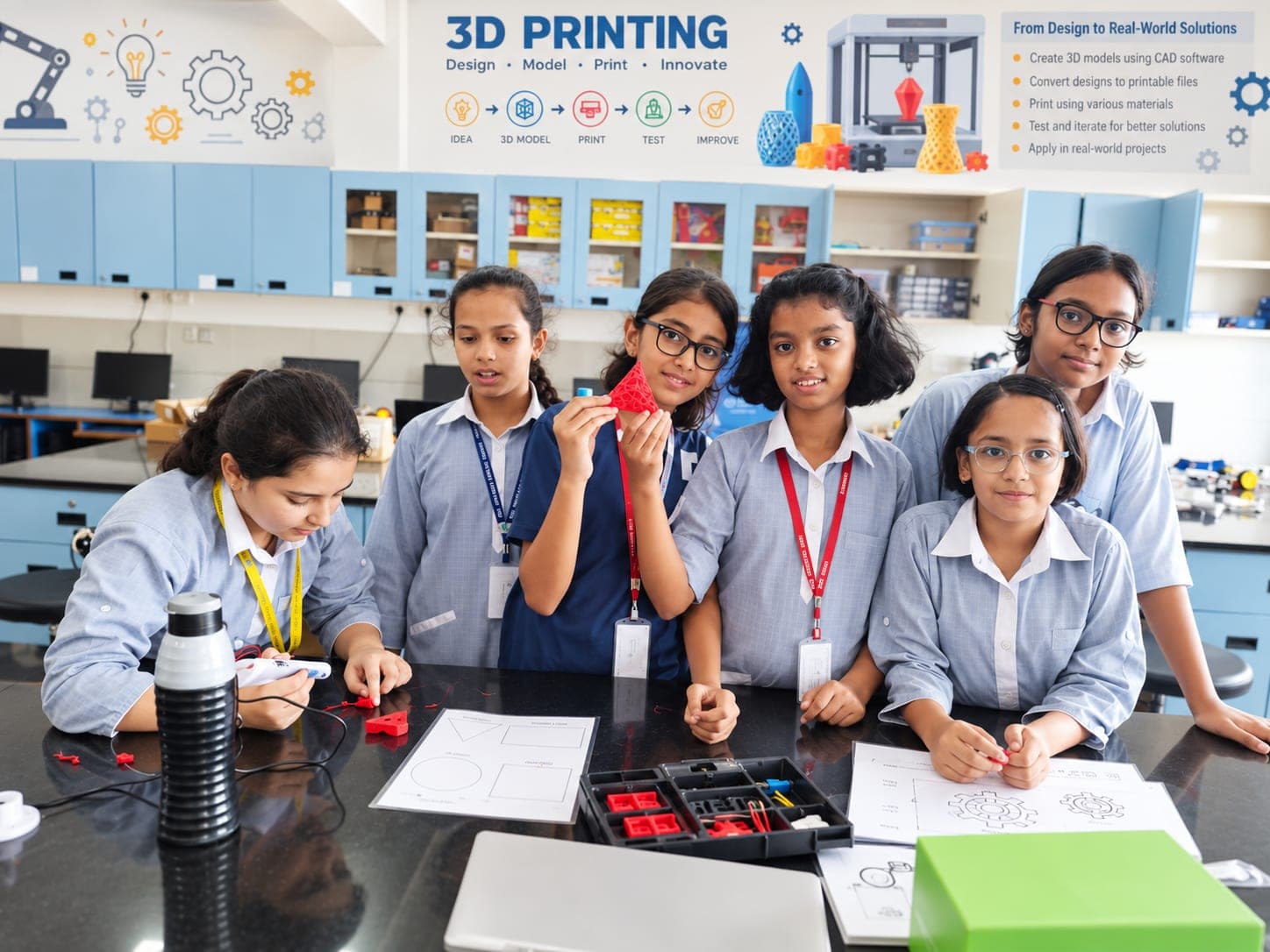
An Atal Tinkering Lab (ATL) is a dedicated space where students build, test and improve their own ideas with electronics, robotics, sensors, 3D printing and hand tools. The scheme is run by the Atal Innovation Mission (AIM) under NITI Aayog, and for many schools it is the most practical route to a well-equipped making space.
Getting the grant is only half the job. The schools that get the most from an ATL plan how the lab will be used before the first box is opened. This guide covers both.
What the scheme provides
Under AIM's published guidelines, a selected school receives grant-in-aid of ₹20 lakh over five years: one part for setting up the lab, and the rest for running and maintaining it in the following years. Schools apply online through the Atal Innovation Mission portal when applications are open.
Always check the current guidelines
Grant amounts, eligibility and application windows are set by AIM and can be revised. Read the latest guidelines on aim.gov.in before you plan around any figure, including the ones in this article.
Before you apply: a readiness checklist
- Space: the guidelines ask for a dedicated room of about 1,500 sq ft (about 1,000 sq ft in hilly and island regions), with reliable power, ventilation and storage.
- Grades: identify which grades will use the lab and when. A lab that only serves one class is hard to justify.
- A lab in-charge: name a teacher who will own the lab, ideally with a second teacher as backup so the lab doesn't stall if one person leaves.
- Timetable: decide where lab periods will come from, such as activity, computer or science periods, or a weekly tinkering slot.
- Leadership support: the principal's backing matters most when the lab needs time in the timetable, not just money.
Planning the lab itself
Equip the lab for the projects students will actually build, not for a catalogue. A typical ATL brings together a few zones:
- Electronics and robotics: microcontroller boards, sensors, motors and robotics kits, shared by small groups of students.
- Digital fabrication: a 3D printer and design software so students can turn sketches into parts.
- Mechanical tools and safety: hand tools, a soldering station, first aid and clear safety rules on the wall.
- Computers: enough machines for coding and design work in groups.
- Display space: shelves or a wall where finished projects stay visible to the rest of the school.
Why some labs stay busy and others don't
Most under-used labs have good equipment. What they lack is a plan for using it. The common causes are predictable:
- 1Only one trained teacher. When that teacher is busy or leaves, the lab closes. Train at least two.
- 2No structured program. Open-ended tinkering is valuable, but most students need a sequence of guided projects first.
- 3No regular slot in the timetable. If the lab depends on free periods, it won't get used.
- 4No visible outcomes. Exhibitions, competitions and project showcases keep students, parents and leadership invested.
Use the mentor network
AIM's Mentors of Change program connects schools with volunteer mentors from industry and academia. A mentor who visits regularly can make a big difference to the quality of student projects.
A simple first-year plan
- 1Term 1: set up the lab, train teachers and run guided projects so every student builds something that works.
- 2Term 2: move to semi-open challenges where teams choose a problem in their school or community.
- 3Term 3: hold a school-level showcase and enter interested teams into inter-school competitions.
No grant? You can still build a tinkering lab
Many schools fund a smaller lab themselves, or with support from a company's CSR program. The same principles apply: plan the space for real projects, train more than one teacher, and give the lab a fixed place in the timetable.
Univerzia AI helps schools plan, set up and run tinkering labs, whether funded through ATL or not, and can revive an existing lab that isn't being used. We don't decide grants; schools apply directly to the Atal Innovation Mission.
Planning something like this for your school?
Tell us about your grades, space and goals, and we'll show you how it could work in your school.